As a six year old, my loving mother first introduced me to owning my first Bible and a little daily bread devotional book. I remember being encapsulated by the thought that I was grown up enough to be encouraged to do something independently.
Yes! The very first book I ever read was a Bible, and until today that sparked my desire for reading at a very young age, as I grew older my reading, speaking and writing skills articulated fairly well as someone who did not own a library of books yet picked up any book that was lying around to read.
Today, I believe as a parent introducing your children to bible stories at a young age and most importantly owning a bible too is essential, as I reflect on this, I realised the impact that reading has had on me at a very young age had my mother not introduce reading to me early I do not know what it would be like?

I was probably six years old. (Photocredit: unknown)
Until moving to Glasgow in 2013, I discovered upon walking through the doors of the Christian book shop- a similar style of coloured books of the bible characters I had read at the age six. Mom use to buy me these books that were picture books (not hardcover) black and white pages only but as a beginners- I thoroughly enjoyed reading this special books. As I grew older I noticed they didn’t make them anymore.
I remember taking pictures of the books nicely arranged and displayed on the book shelves, that I had seen as they resembled what I read when I was younger back in Fiji. I quickly brought out my phone to take photos and sent it back to my mother on this occasion. She was even surprised that I still remembered. If anything mom introduced me to the world of English reading and speaking even before she knew.
Sadly for me, I never got to read fijian (my mother tongue) until I was in Year Five upon attending a school called “Namaka Public School” I was so excited to be attending my first fijian school that it encouraged me to try different activities and one of it was to take up vernacular.
Now, I am no professional writer, this is my first experience of writing blogs and even I am surprised at the opportunity that entails writing these somewhat long essays- it actually makes me feel like a free bird.
English on the other hand is my second language, so that makes me bilingual. As much as I try to speak english fluently, I do recognise that my mother tongue is very important too, I am recognised not just by the tone of my skin but also the language I speak. There have been occasions when I walk into shops and have conversations with strangers I barely know and as I speak they ask- so what accent is that after they hear me ? Well it’s not an accent, I’m a fijian national.
While my children are first English speakers in my family, my husband believes in keeping our mother tongue alive by speaking to our children in our language at home. This has been well received by our little ones. Although my husband has his own dialect with maternal links to Kadavu, I on the other hand often speak my Lau dialect to my children, and it’s been a great initiative so far.
At the moment they understand the simple fijian language, our eldest child has tried occasionally to speak to us in fijian and has mentioned how she is teaching her friend in school simple words like Bula (Hello), Lako mai (Come here). As I parent I am grateful that she recognises the need to cultivate her fijian language skills and use it where she can.
Today, my eldest child is in Year 3 and whilst attending her parents interview, her teacher exclaimed that her reading is superb and her voice is beautiful (her dad reacts to me with a grin and cheekily replies (she gets that from her mother) while I would like to take the credit, I do not think this is so; every parent has a trick and a treat for how to build their children’s confidence through encouraging them to read not just for leisure but to read by choice.
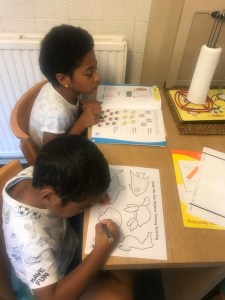
Now as parents we made a decision as a couple to work together in how we do homework with our children who are in school. While I am passionate about reading and writing, my husband on the other hand loves mathematics and design/drawing. In saying this, we have now both mastered well our homework times with our children who are at school. One of the things I have encouraged my husband is to be involved in homework too so that the children can see and communicate freely to him without hesitation.
I know this too well, as when I was growing up it was difficult to be doing homework by myself and when it came to my parents involvement, one wrong answer or incorrect reply did not end well for me. Now being a parent myself, I am choosing to change the narrative of how to go about doing tricky and challenging homework, for the most part our children enjoy their homework time, I struggled with this at their age and so I do not want to make them feel that homework is burdensome and unnecessary.
I remember listening to a podcast lately on reading “over two people having a conversation” -where the individual mentions “Reading can do many things” and I believe that, if anything it is a universal language, while it may seem daunting to speak our mother tongue, speaking English is probably the only language we can all agree that helps us to communicate even if we are from different nationalities.
As I conclude this write up, I’d like to think having a knowledge to read and speak English is essential whilst also nurturing and upholding your cultural identity and language is too.
Happy week!
C
Discover more from Fragranced Vessel Blog
Subscribe to get the latest posts sent to your email.
 Fragranced Vessel Blog